

What skill would you like to learn?
Be simpler and more humorous 😜
As Leonardo 😎

Artist
Year
1490
Type
Pen, brown ink and watercolor over metalpoint on paper
34.4 cm × 24.5 cm
(13.5 in × 9.6 in)
Location
Venice
Ser más simple y más divertido. 😜
Como Leonardo 😎
For years I have tried different skills, mostly related to my work.
I became an engineer, trying to be closer to one of the most admired people of my youth, Leonardo Da Vinci, his incomparable genius and his enormous breadth of knowledge were a very important driving force in my decisions.
Me convertí en ingeniero, tratando de estar más cerca de uno de las personas mas admiradas de mi juventud, Leonardo Da Vinci, su genio incomparable y su enorme amplitud de conocimientos fueron un motor muy importante en mis decisiones.
It was a very difficult task to achieve
Fue una tarea muy difícil de lograr.
Leonardo da Vinci is widely regarded as a Renaissance polymath who mastered a wide range of skills. Some of the areas in which he excelled include:
Leonardo da Vinci es ampliamente considerado como un erudito del Renacimiento que dominaba una amplia gama de habilidades. Algunas de las áreas en las que se destacó incluyen:
Painting:
Leonardo is most famous for his masterpieces such as the Mona Lisa and The Last Supper. However, the pictorial work that impacted me the most was the so-called “Vitruvian Man.”
The complete article from Wikipedia
Brief Resume
The Vitruvian Man (Italian: L’uomo vitruviano; [ˈlwɔːmo vitruˈvjaːno]) is a drawing by the Italian Renaissance artist and scientist Leonardo da Vinci, dated to c. 1490. Inspired by the writings of the ancient Roman architect Vitruvius, the drawing depicts a nude man in two superimposed positions with his arms and legs apart and inscribed in both a circle and square. It was described by the art historian Carmen C. Bambach as “justly ranked among the all-time iconic images of Western civilization“.[1]
The Vitruvian Man is often considered an archetypal representative of the High Renaissance, just as Leonardo himself came to represent the archetypal ‘Renaissance man‘.[36] It holds a unique distinction in aligning art, mathematics, science, classicism, and naturalism.[37]The art historian Ludwig Heinrich Heydenreich, writing for Encyclopædia Britannica, states, “Leonardo envisaged the great picture chart of the human body he had produced through his anatomical drawings and Vitruvian Man as a cosmografia del minor mondo(‘cosmography of the microcosm‘). He believed the workings of the human body to be an analogy, in microcosm, for the workings of the universe.”[38]
Kemp calls the drawing “the world’s most famous drawing”,[9] while Bambach describes it as “justly rank[ing] among the all-time iconic images of Western civilization”.[1] Reflecting on its fame, Bambach further stated in 2019 that “the endless recent fetishizing of the image by modern commerce through ubiquitous reproductions (in popular books, advertising, and the Euro coin) has kidnapped it from the realm of Renaissance drawing, making it difficult for the viewer to appreciate it as a work of nuanced, creative expression.”[1]
Pintura:
Leonardo es más famoso por sus obras maestras como la Mona Lisa y La Última Cena. Sin embargo la obra pictórica que mas me impacto fue el llamado “Hombre de Vitrubio”
Breve currículum
El Hombre de Vitruvio (italiano: L’uomo vitruviano; [ˈLwɔːmo vitruˈvjaːno]) es un dibujo del artista y científico del Renacimiento italiano Leonardo da Vinci, que data de c. 1490. Inspirado en los escritos del antiguo arquitecto romano Vitruvio, el dibujo representa a un hombre desnudo en dos posiciones superpuestas con los brazos y las piernas separados e inscrito en un círculo y un cuadrado. La historiadora del arte Carmen C. Bambach la describió como “justamente clasificada entre las imágenes icónicas de todos los tiempos de la civilización occidental”.
Kemp llama al dibujo “el dibujo más famoso del mundo”,[9] mientras que Bambach lo describe como “justamente clasificado entre las imágenes icónicas de todos los tiempos de la civilización occidental”.
Reflexionando sobre su fama, Bambach afirmó además en 2019 que “la reciente e interminable fetichización de la imagen por parte del comercio moderno a través de reproducciones ubicuas (en libros populares, publicidad y la moneda de euro) la ha secuestrado del ámbito del dibujo renacentista, dificultando para que el espectador lo aprecie como una obra de expresión creativa y matizada.”[1]
Drawing:
His detailed anatomical drawings and sketches are renowned.
Dibujo:
Sus detallados dibujos y bocetos anatómicos son reconocidos.
Anatomy:
He conducted dissections to study the human body in great detail.
Anatomía:
Realizó disecciones para estudiar el cuerpo humano con gran detalle.
Engineering:
Leonardo designed innovative machines and inventions, including flying machines and military devices.
Ingeniería:
Leonardo diseñó máquinas e inventos innovadores, incluidas máquinas voladoras y dispositivos militares.
Mathematics:
He made significant contributions to geometry and mathematical studies.
Matemáticas:
Hizo importantes aportes a la geometría y los estudios matemáticos.
Architecture:
Leonardo designed architectural plans and concepts.
Arquitectura:
Leonardo diseñó planos y conceptos arquitectónicos.
Science:
His interests included botany, geology, and the study of natural phenomena.
Ciencias:
Sus intereses incluían la botánica, la geología y el estudio de los fenómenos naturales.
Writing:
Leonardo kept numerous notebooks filled with his thoughts and ideas.
Escritura:
Leonardo mantuvo numerosos cuadernos llenos de sus pensamientos e ideas.
Philosophy:
He delved into philosophical inquiries and wrote on various philosophical topics.
Filosofía:
Profundizó en indagaciones filosóficas y escribió sobre diversos temas filosóficos.
Leonardo da Vinci’s mastery of these diverse skills makes him one of history’s most versatile and brilliant individuals
El dominio de Leonardo da Vinci de estas diversas habilidades lo convierte en una de las personas más versátiles y brillantes de la historia.

(c. 1503–1516).
Oil on poplar panel, 77 × 53 cm (30 × 21 in).
Louvre, Paris
List of works by Leonardo da Vinci

. Uffizi, Florence
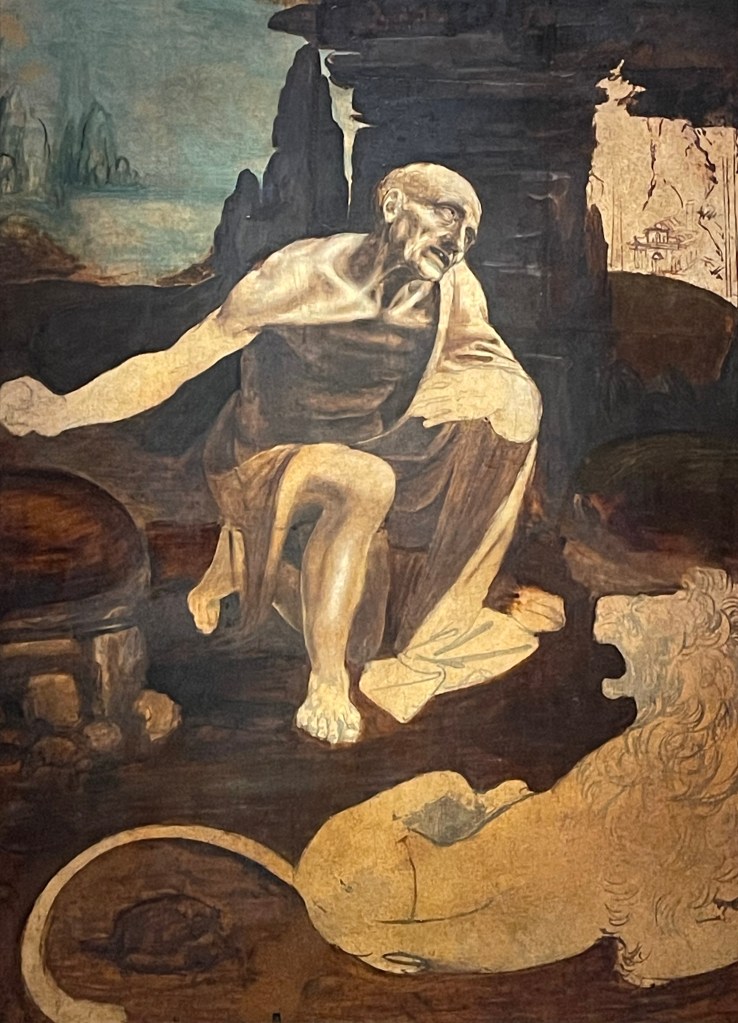
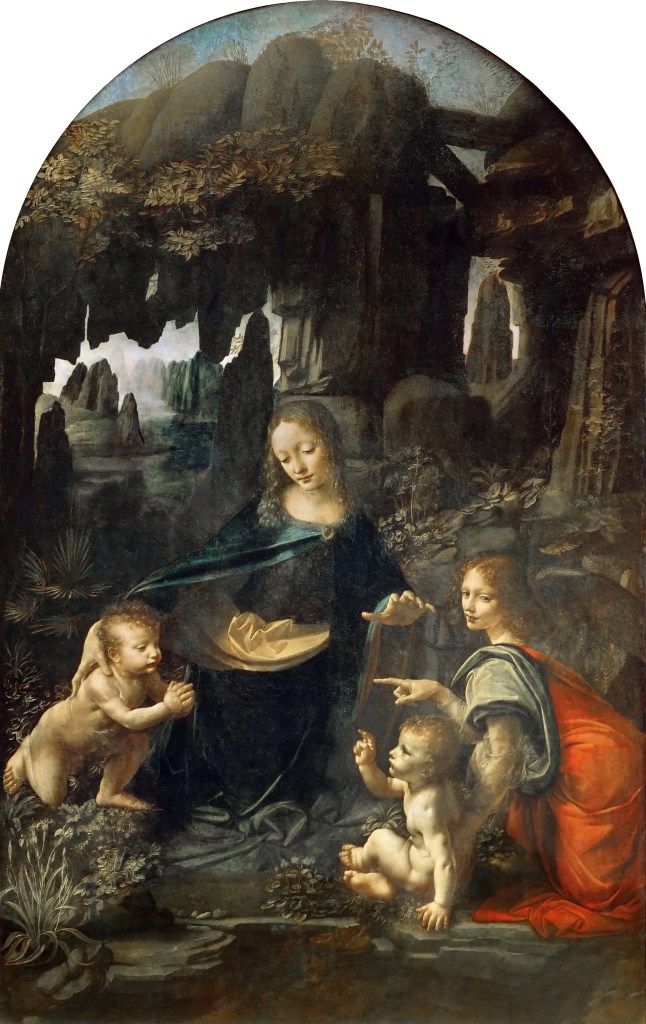
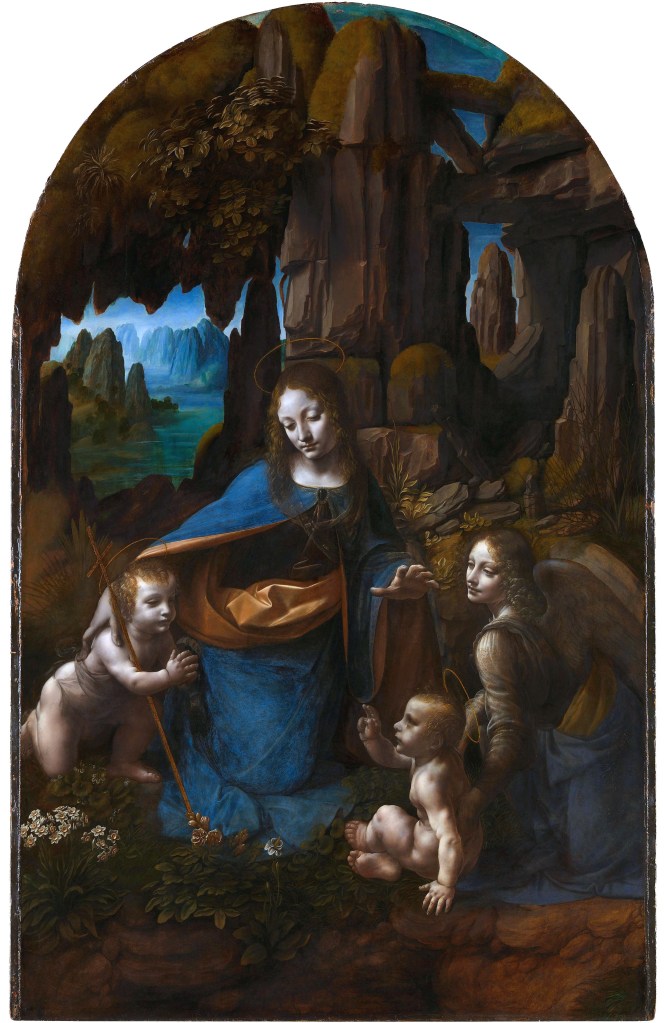

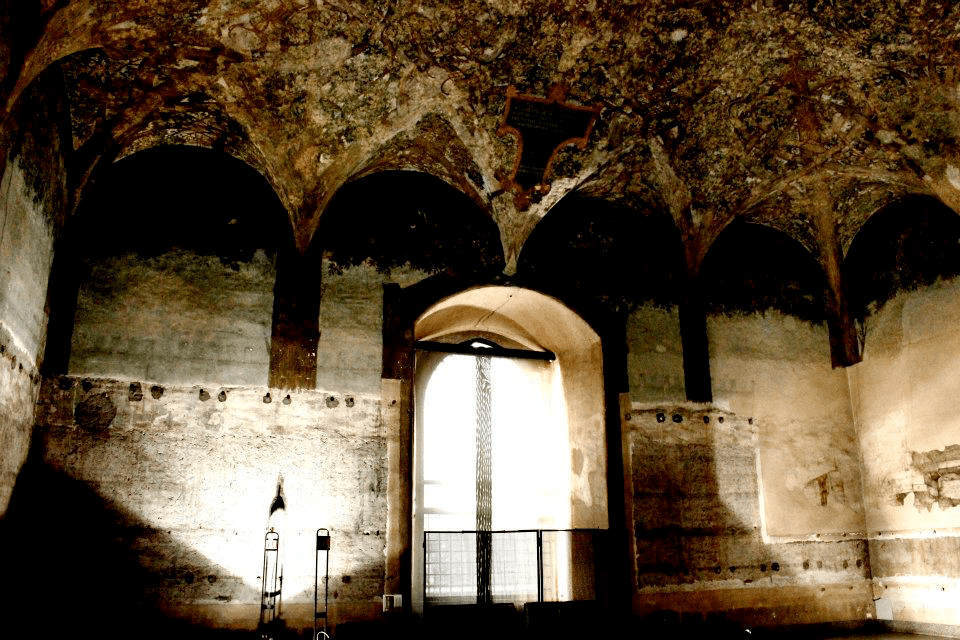
(In English: ‘room of the wooden planks’)
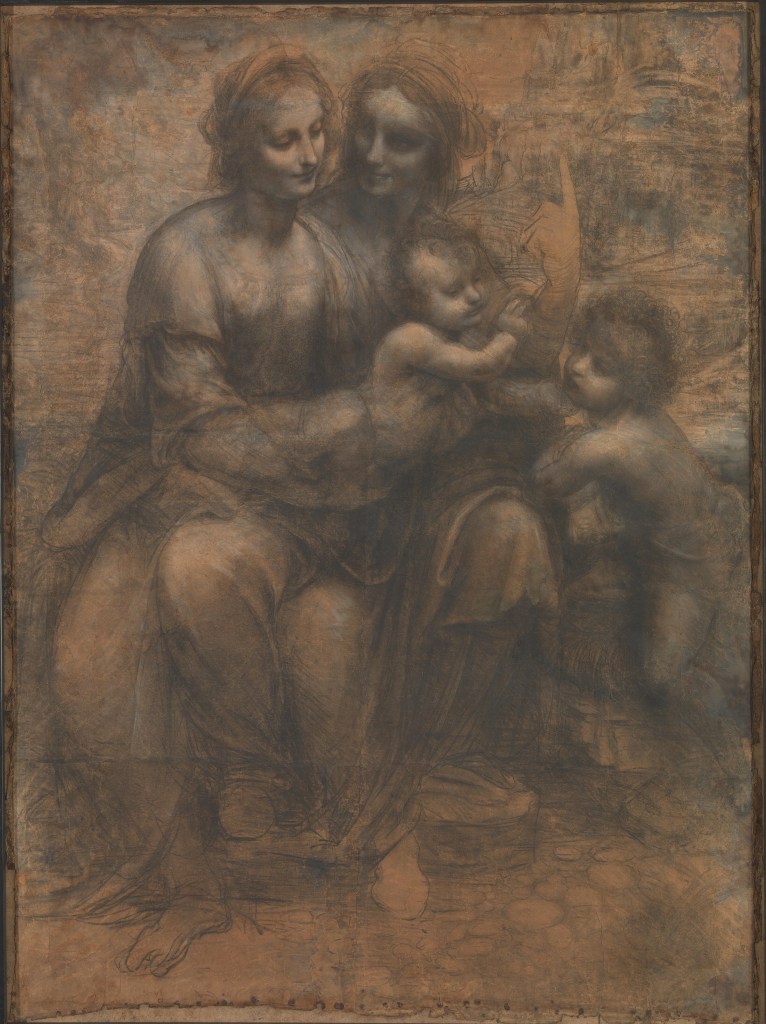
The Virgin and Child with Saint Anne and Saint John the Baptist, c. 1499–1508 National Gallery, London


 SIGNAL GROUP
Leave a reply to Si la vida te da limones… pide tequila y sal… – SIGNAL GROUP Cancel reply